Still Standing
Adams, Khealan
Hurricane Irma made landfall on September 6, 2017, with sustained winds of 295 km/h, the strongest Atlantic hurricane ever recorded at the time. It killed 11 people on the island and damaged roughly 90 percent of structures. The world watched for a few weeks, aid was pledged, and then the news moved on.
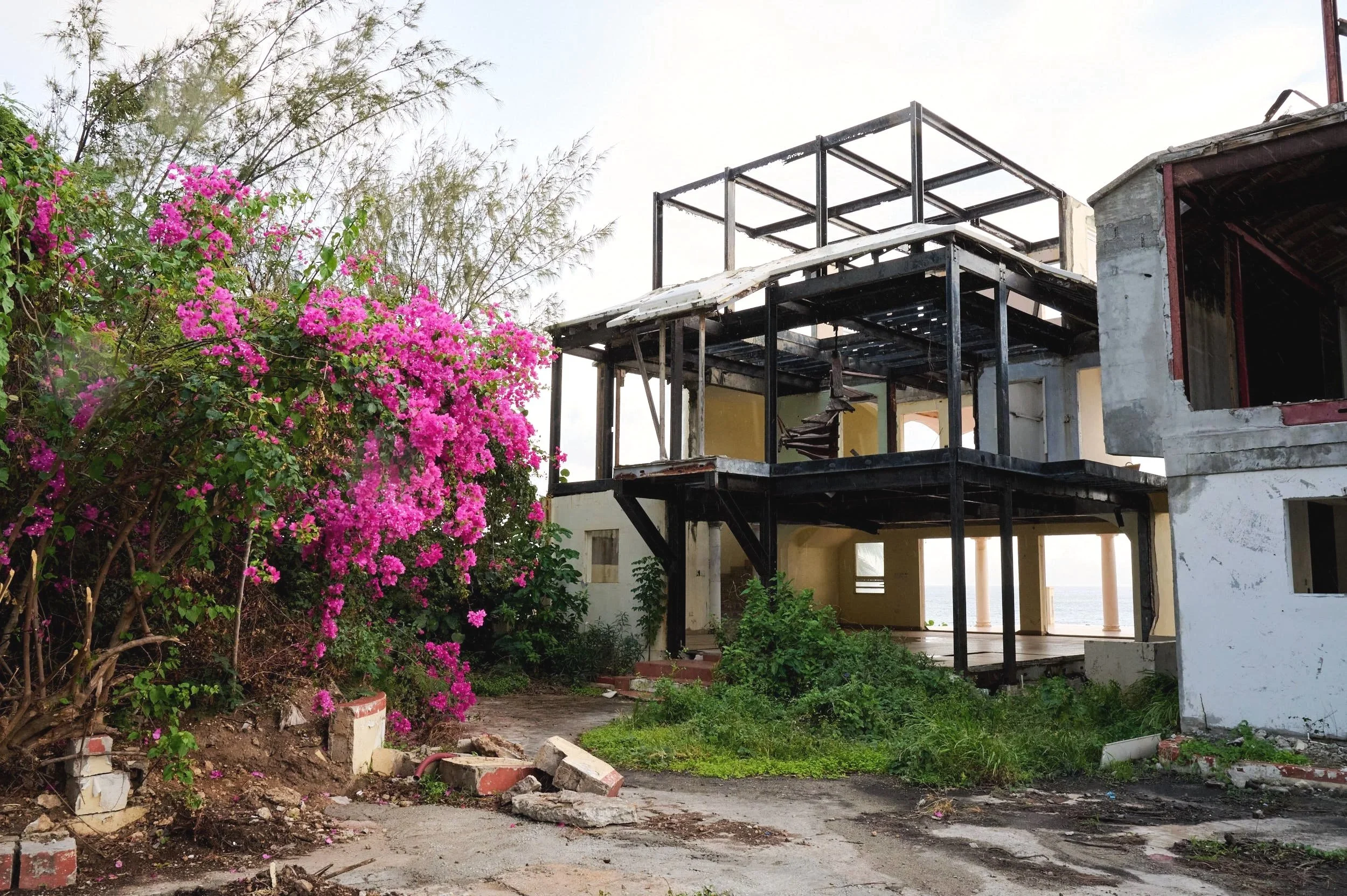
Hot pink blooms climb beside a blackened steel frame in a neighbourhood just outside Maho, no roof, no walls, just skeleton and rust. Close-by, behind a freshly painted gate, a white villa sits pristine in the afternoon sun. Both have been this way for years. Sint Maarten doesn't separate its beauty from its damage. It stacks them on top of each other and lets you figure out what to do with that.
That's the story for most of the new houses hit by this storm.
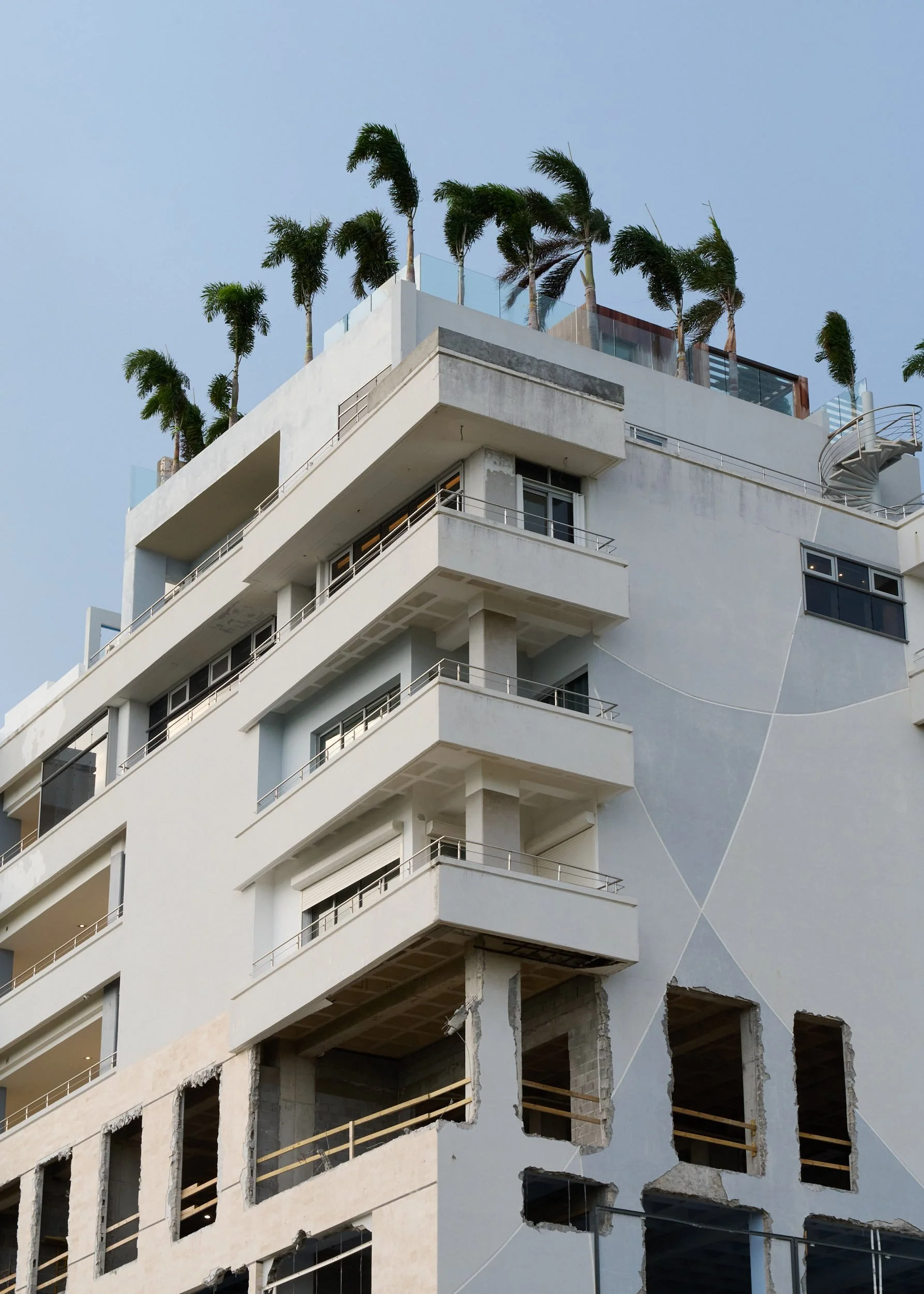
This is what Category 5, 7 years later, looks like when you actually drive through it.
Driving around Sint Maarten, the pattern repeats itself block by block. An immaculate colonial villa with manicured hedges sits across from a gutted hut overtaken by weeds. A high-rise near the waterfront shows occupied luxury balconies with rooftop palms on its upper floors, and raw concrete, hollow frames, and years-old scaffolding at street level. A small yellow building with red trim, once a home or a shop, has been swallowed by overgrowth and graffiti, its door gone, trash in the yard. The house beside it looks like it was painted last week.
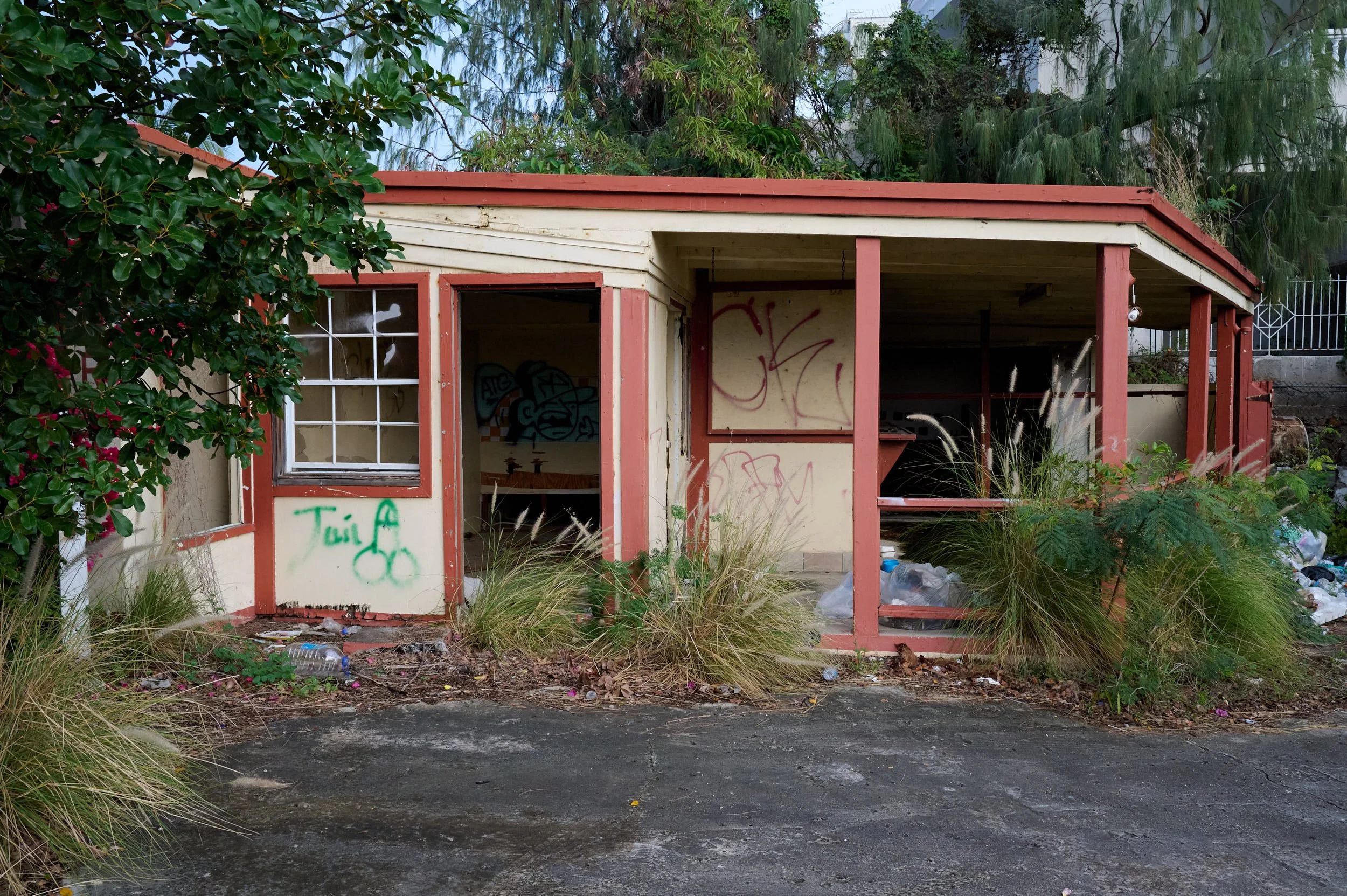
What hurricane Irma left behind isn't a ruin field. It's something stranger and harder to photograph; an island where destruction and elegance exist in constant, matter-of-fact proximity.
There is no clean line between what was destroyed and what survived. The storm didn't sort by wealth or by neighbourhood. It hit everything. What sorted things out afterward was money, who had it, who didn't, who could access insurance, who had connections to get materials in. Seven years on, you can read the island's economic geography in its rooftops.
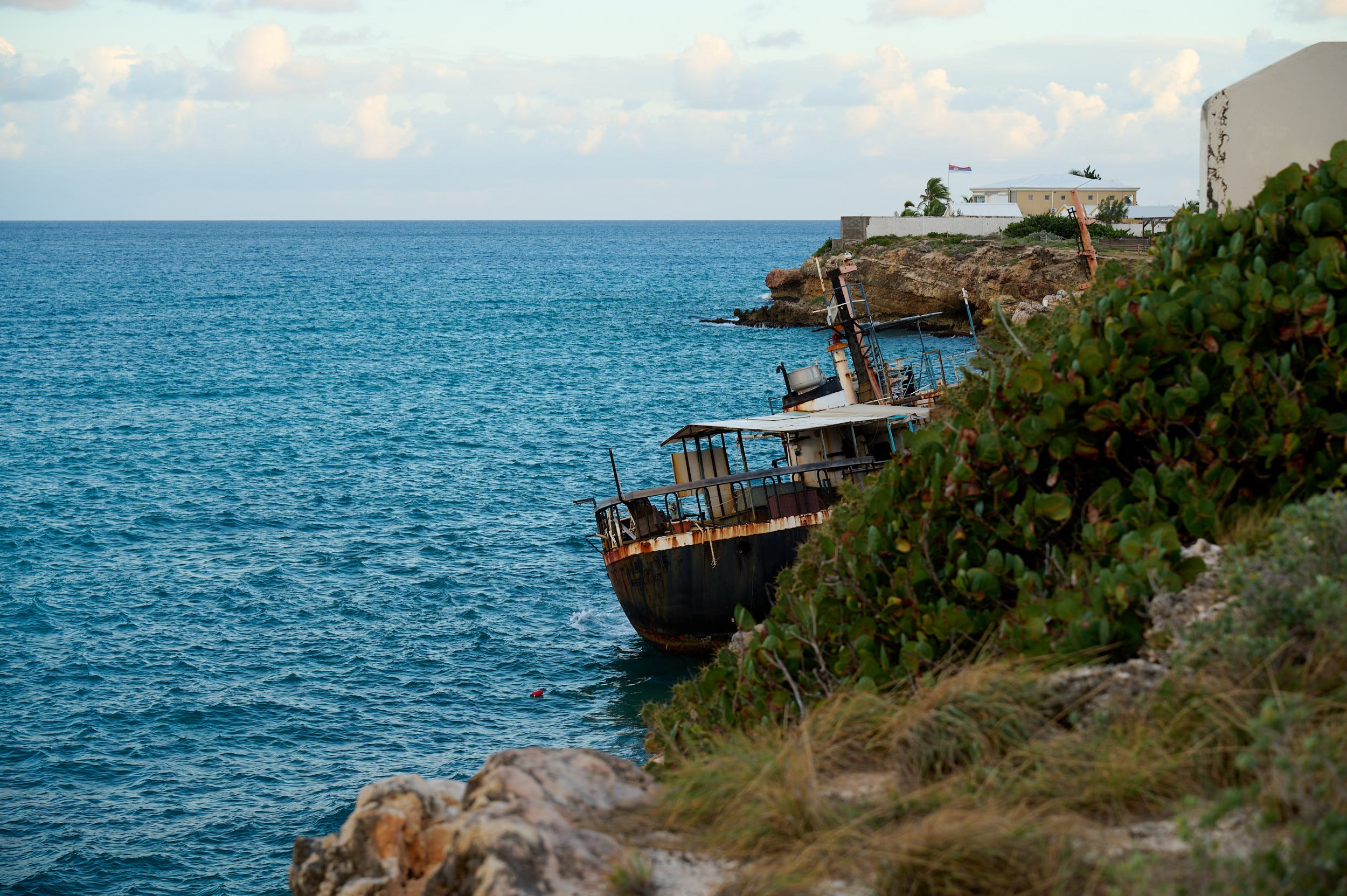
Along the coast, a commercial vessel sits rusting against rocks where storm surge left it, the Caribbean behind it a ridiculous shade of turquoise. The water is beautiful. The ship doesn't move. Both things are true and neither cancels the other out, which is the most accurate description of Sint Maarten I can offer.
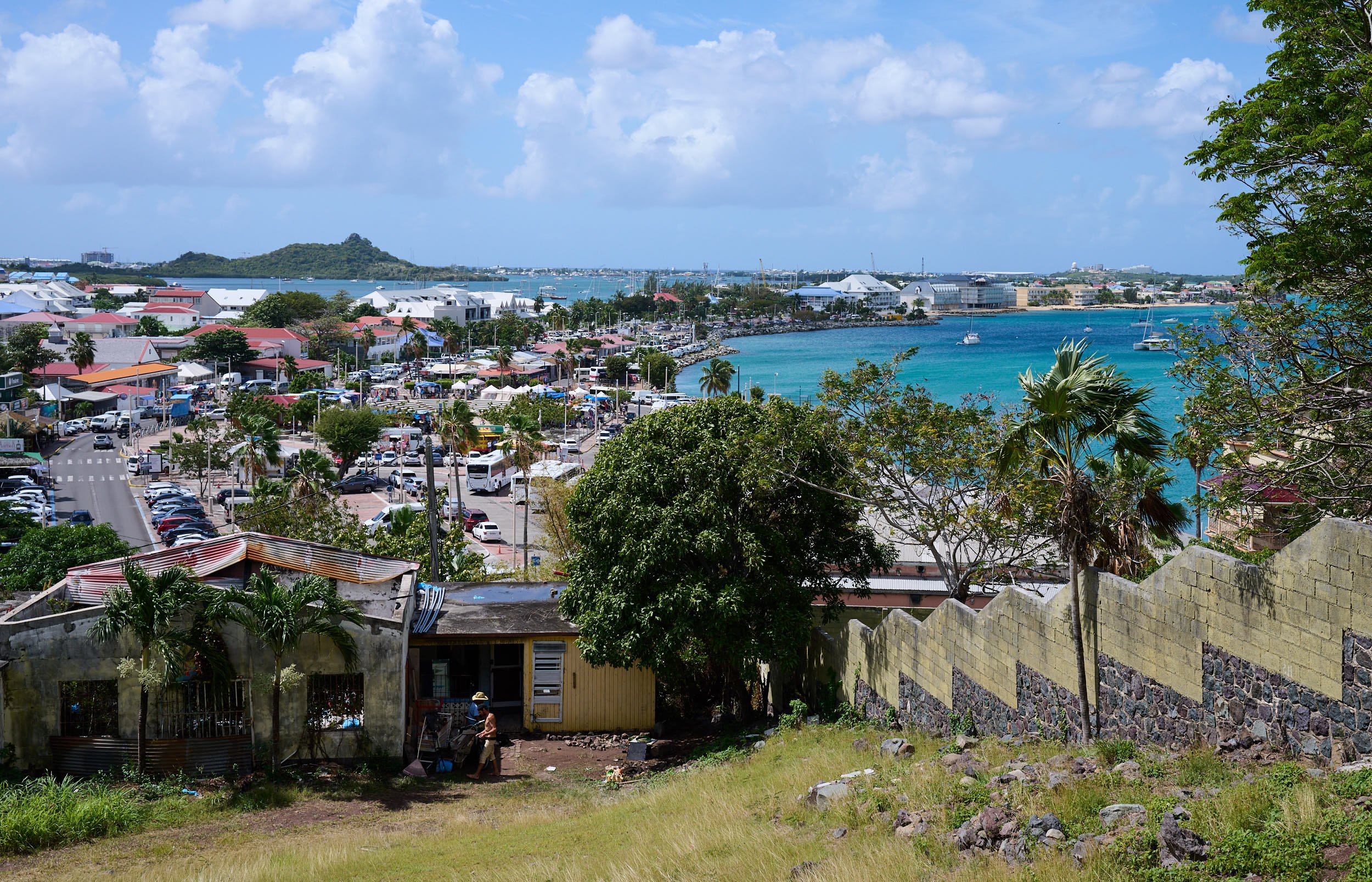
From a hilltop above Marigot's harbour, the city looks thriving. The market is packed, the bay is full of sailboats, the waterfront restaurants are open. In the foreground of that same view, a half-collapsed structure sits unremarked, people going about their day like it’s any other day. Because it is. Sint Maarten isn't frozen in 2017. The island is alive, genuinely, visibly alive, and the damage is simply part of the landscape now, the way potholes are in any city that's been through something and kept moving.
That's what made it hard to photograph. I wasn't documenting a disaster zone. I was documenting a beautiful island with a complicated layer underneath, one that revealed itself gradually, the longer you drove around and paid attention. The elegant villas are real. The turquoise water is real. The gutted buildings and the rusted ship and the huts with collapsed roofs sitting next to huts in perfect condition are also real.
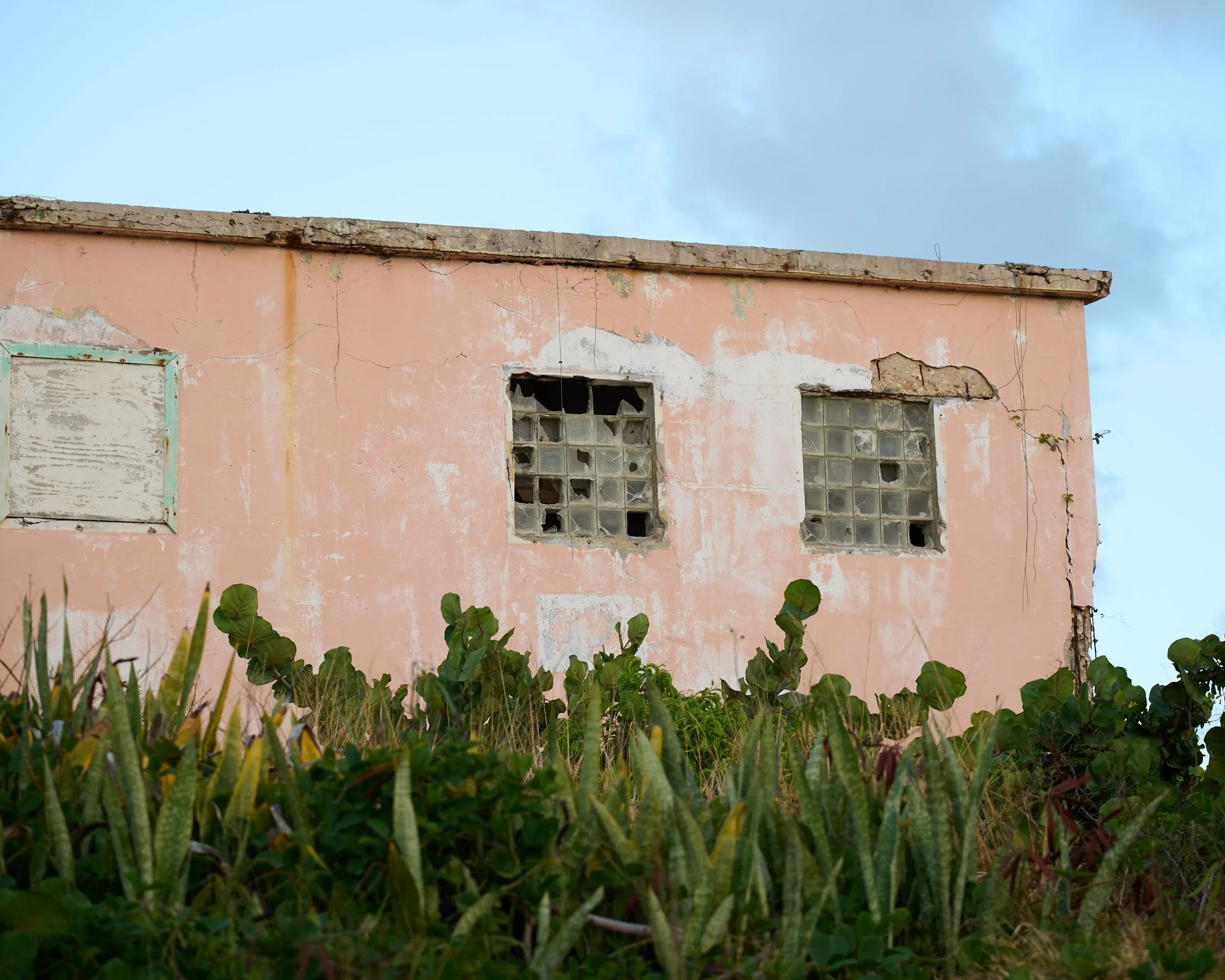
Sint Maarten doesn't ask you to feel any particular way about the contrast. It just exists inside it, same as it always has, sun on the water, flowers in the wreckage, someone's laundry drying on a line next to a wall with no roof.
I had a great time. I also couldn't stop taking pictures of what wasn't fixed.
Both of those things felt true the whole time I was there.
Article Writing & Photos by Khealan Adams
